11 Realistic Ways to Save Money When Your Salary Is Small (Start Tiny)
Realistic ways to save money when your salary is small, focusing on tiny consistent amounts, simple tracking, and protecting your essentials first.

Written by Ali Usman
Updated July 11, 20266 min read
How to read this guide
- Who this is for
- Realistic ways to save money when your salary is small, focusing on tiny consistent amounts, simple tracking, and protecting your essentials first.
- Country / market
- General guidance; check local rules, prices, and currency
- Last substantive update
- Research type
- Calculation and desk research
- Sources checked
- Citations are placed beside the claims they support
- Key assumptions
- Worked amounts are examples, not promised savings; local costs and circumstances vary.
On this page
- The short version
- Cover the essentials first
- Start tiny, and make it automatic
- Watch where it actually goes
- A real month, with rough numbers
- Where good intentions go wrong
- Your one-page starter plan
- One honest caveat
- Questions people actually ask
- How much should I save on a small salary?
- Should I save or clear what I owe first?
- What if I can't save anything yet?
- Start with one change
When most of your pay is already spoken for before it lands, "just save a bit" can sound almost insulting. But saving has far less to do with how much you earn than people assume. It's a habit you build and then protect, and at the start the size of it barely matters — what matters is that it keeps happening. A few pounds, saved every single payday, is the thing that grows. Here are some realistic ways to do it when the income is genuinely tight.
The short version
Start with a tiny amount you'll hardly notice, make it automatic, and put your essentials first. Then watch where your money actually goes, because that's where the small leaks hide. Consistency beats size every time: a little saved each payday will always beat holding out for some "spare" lump sum that never quite turns up. The right number depends on your situation, and starting small is completely fine.
This is for students, people early in their careers, and anyone on a tight income who's quietly convinced there's nothing left to save. You don't need a big salary or any financial know-how. On a small income every pound already has a job, and that's precisely why a saving habit earns its keep — it hands you a small buffer for the surprises instead of leaving you reaching for a credit card. Build the routine now and it tends to grow as your income does.
Cover the essentials first
Before a penny goes anywhere near savings, make sure rent, food, utilities, and transport are accounted for. Saving should never come out of the money that keeps the lights on. Once you know your must-pay costs in plain numbers, you get an honest picture of what's genuinely left — which is usually more useful than a vague sense of dread.
Start tiny, and make it automatic
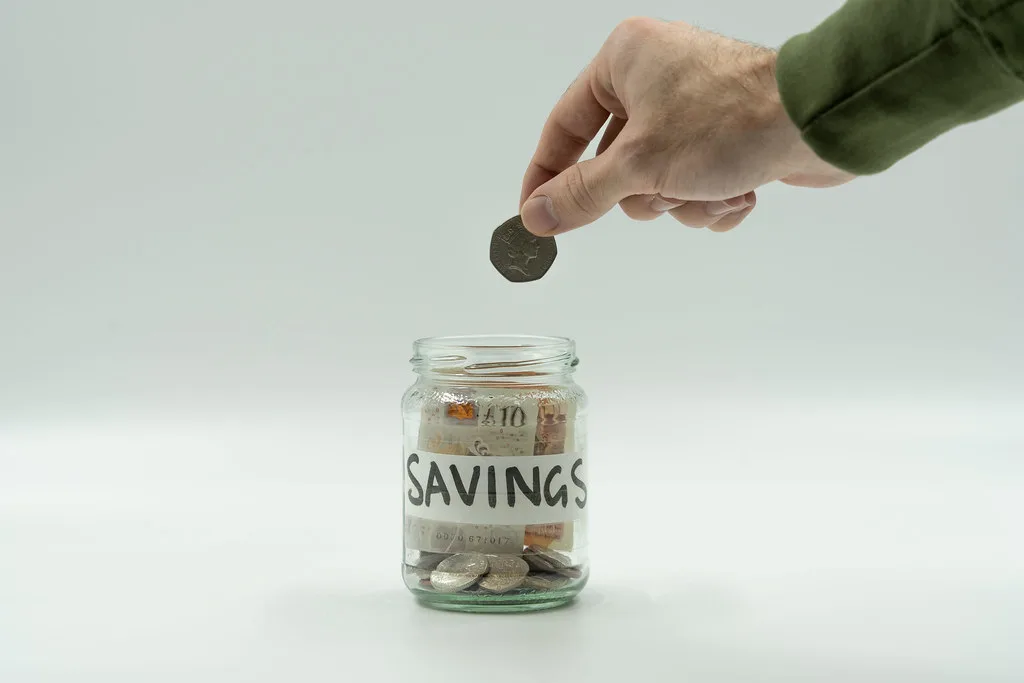
Pick an amount so small it barely registers, and move it to savings the moment you're paid — automatically, if you can set that up. Starting small takes the pressure off and that's what makes it stick. You can always nudge it up later, once the habit feels like part of the furniture rather than a monthly act of willpower.
Watch where it actually goes
For a week or two, note down what you spend. The little repeated buys are where a bit of saving room usually turns out to be hiding. Do it without the self-flagellation — the point is to see clearly, not to feel guilty — so you can quietly redirect a small slice toward savings.
A real month, with rough numbers
Real-life example
Take someone on a tight income who's sure they can't save anything at all. They cover essentials first, set up an automatic £10 transfer each payday, and track their spending for a fortnight. A couple of small recurring buys turn up; they trim one and free another £10. At roughly £20 a month, the buffer slowly builds. Rounded, made-up figures — yours will differ — but starting tiny and keeping it consistent is a realistic way in.
Where good intentions go wrong
- Waiting until you earn more. The habit matters more than the amount, and "more" keeps moving.
- Saving before the essentials are covered. You'll only end up pulling the money straight back out.
- Setting a number that hurts. Over-ambitious targets get abandoned within a month.
- Tracking nothing. Small leaks stay invisible until you actually look.
Your one-page starter plan
Simple checklist
- Cover rent, food, utilities, and transport first
- Pick a small amount you will barely notice
- Automate the transfer for payday
- Track your spending for one or two weeks
- Look for small recurring leaks to trim
- Increase the amount only when it feels easy
- Keep the habit going over time
You can build the wider picture with the beginner monthly budget plan.
One honest caveat
When to be careful
If things are tight enough that the essentials themselves are at risk, cover your needs and reach out to a legitimate local support service rather than forcing savings on top. And never take on high-cost borrowing to "free up" money to save — it almost always costs more than it gains you. This is general educational content, not personal financial advice, and your own circumstances come first.
Questions people actually ask
How much should I save on a small salary?
Whatever you'll barely notice, however small. At this stage consistency counts for far more than the size of it.
Should I save or clear what I owe first?
That depends on your own situation, and this guide can't give you individual advice. Plenty of people keep a tiny buffer while they handle essentials, but your priorities may sit differently.
What if I can't save anything yet?
Then start with the essentials and the tracking. Even spotting a single small leak is real progress you can build on later.
Start with one change
It's about protecting the essentials, starting tiny, and keeping it going — not waiting around for a windfall. Build the habit now and let it grow with you. To structure the rest of your money, see how to budget a small salary and how to track expenses for 7 days, or browse more in Money Saving.
Keep exploring
Where to go next if this guide was useful.
About the author
Founder and sole author, BudgetCalm
I started paying real attention to money in 2016 and have run my own budget since 2018. I built BudgetCalm to cover what most finance sites skip — groceries, no-spend months, and making a tight budget actually hold. I've written 100+ guides and built the 6 calculators on this site because I couldn't find free ones that handled real household numbers without a signup wall. I cover budgeting, grocery savings, no-spend challenges and frugal living. I don't cover investing, tax, credit cards, loans, insurance or debt management.
Disclaimer: This content is for educational and informational purposes only and does not constitute financial advice. Always consult a qualified financial professional before making financial decisions.
Get practical budgeting tips delivered to your inbox
Calm, beginner-friendly guides for budgeting and saving money, straight to your inbox.
No spam. Educational money-saving tips only. Unsubscribe anytime.