7 Easy Steps to Build a Beginner Monthly Budget Plan (Free Template)
Build a simple monthly budget in 7 calm steps. See exactly where your money goes and create a plan that fits your real life, even on a low income.

Written by Ali Usman
Updated July 11, 20268 min read
How to read this guide
- Who this is for
- Build a simple monthly budget in 7 calm steps. See exactly where your money goes and create a plan that fits your real life, even on a low income.
- Country / market
- General guidance; check local rules, prices, and currency
- Last substantive update
- Research type
- Calculation and desk research
- Sources checked
- Citations are placed beside the claims they support
- Key assumptions
- Worked amounts are examples, not promised savings; local costs and circumstances vary.
On this page
- What you'll have by the end
- First, get your real income on paper
- Then list the bills that don't really change
- See where the rest actually goes
- Give every category a rough number
- What a first budget can look like
- The mistakes that sink a first budget
- Your one-sitting checklist
- A fair warning before you start
- Questions people actually ask
- How much should I save each month?
- Notebook or app?
- What if I blow the budget in week one?
- Where to go next
A budget isn't a punishment, and it isn't a spreadsheet you have to love. It's just a plan for money you already have. Most people who feel anxious about money aren't blowing it on wild splurges — they simply have no clear picture of where it lands each month. Sort out that picture and a lot of the stress quietly drains away. You can build the whole thing in one calm sitting with a notebook, a free spreadsheet, or a ready-made household budget template.
What you'll have by the end
A single page that shows your monthly income, your fixed bills, a realistic amount for everyday spending, and whatever's left to save or catch up on. That's it. No apps required, no finance degree, no shame about whatever the numbers turn out to be.
First, get your real income on paper
Write down the money you can actually count on in a normal month — your take-home pay after tax, not the headline figure. If your income jumps around, use a low-ish typical month so your plan doesn't fall apart the moment things dip. (If that's you, the variable-income approach goes deeper, and budgeting a small salary has its own playbook.)
Then list the bills that don't really change
Rent or mortgage, utilities, phone, transport, any subscriptions, minimum loan or card payments. These are your fixed costs — the stuff that leaves whether you think about it or not. Add them up. This number matters more than people expect, because everything else has to fit in the space that's left.
See where the rest actually goes
Here's the step most people skip, and it's the one that makes the budget real. For a week, jot down everything you spend — yes, the $3 coffee too. A week is short enough to finish and long enough to expose the leaks. If you'd rather follow a structured version, there's a 7-day tracking guide for exactly this.
Give every category a rough number
Now split what's left after fixed bills into a few buckets — groceries, transport top-ups, fun, and savings. Don't aim for perfect; aim for honest. If you like a ready-made framework, the 50/30/20 rule is a gentle starting split, and zero-based budgeting is worth a look if you want every dollar to have a job.
What a first budget can look like
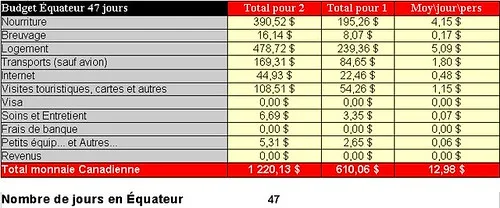
Numbers make this concrete. Here's an illustrative budget on a $4,000/month take-home income, using the 50/30/20 split — 50% on needs, 30% on wants, 20% to savings. Your rent, city, and household will move every line, so treat it as a shape to copy, not exact figures (illustrative, 2026):
| Category | Type | Monthly | Share |
|---|---|---|---|
| Rent / housing | Need | $1,300 | 33% |
| Groceries & essentials | Need | $400 | 10% |
| Transport | Need | $300 | 7% |
| Fun, dining & subscriptions | Want | $1,200 | 30% |
| Savings & extra debt payments | Goal | $800 | 20% |
| Total | $4,000 | 100% |
Not every month looks this tidy — and that's fine. Here's the same idea on a smaller income, flexing as real life lands:
Real-life example
Imagine take-home pay of $1,800 a month. Fixed bills come to $1,150, which leaves $650. They give groceries $260, transport $90, fun $120, and send $180 to savings. The first month, fun runs over by $40 — so the next month they nudge fun down and groceries up, because that's where real life actually landed. These are illustrative numbers; the point is that the plan flexes to fit you, not the other way round.
The mistakes that sink a first budget
- Building it around the income you hope for instead of what reliably arrives.
- Forgetting once-a-year costs (insurance renewals, gifts) so they blindside you.
- Making it so strict there's zero room for fun — that version never survives.
- Writing it once and never looking again.
The common beginner mistakes guide has the full list if you want to dodge them early.
Your one-sitting checklist
Simple checklist
- Write down your reliable monthly take-home income
- Total up your fixed bills
- Track a week of everyday spending
- Split the leftover into a few honest categories
- Set one savings number, even if it is small
- Pick a day next month to review and adjust
There's a printable monthly budget checklist if you'd like to fill it in by hand.
A fair warning before you start
When to be careful
A budget shows you the numbers — it can't fix a situation where the essentials genuinely cost more than the income coming in. If that's where you are, the honest next step is reaching out to a free, non-profit money advice service in your country, not squeezing harder on groceries. This guide is educational and isn't a substitute for personal financial advice.
Questions people actually ask
How much should I save each month?
Whatever you can keep up without resenting it. A small amount you stick to beats an ambitious number you abandon. Even $20 a month builds the habit, and the habit is the real win.
Notebook or app?
Whichever you'll actually open. Apps automate the tracking; a notebook makes you feel each number. Start with the one that feels less like a chore.
What if I blow the budget in week one?
Completely normal. The first month or two is data-gathering, not a test you pass or fail. Adjust the numbers to match reality and carry on.
Where to go next
Don't try to perfect this on day one. Build the rough version, live with it for a month, then tweak. When you're ready, tighten it up with a weekly plan for a tight income or browse more in Budgeting.
Keep exploring
Where to go next if this guide was useful.
About the author
Founder and sole author, BudgetCalm
I started paying real attention to money in 2016 and have run my own budget since 2018. I built BudgetCalm to cover what most finance sites skip — groceries, no-spend months, and making a tight budget actually hold. I've written 100+ guides and built the 6 calculators on this site because I couldn't find free ones that handled real household numbers without a signup wall. I cover budgeting, grocery savings, no-spend challenges and frugal living. I don't cover investing, tax, credit cards, loans, insurance or debt management.
Disclaimer: This content is for educational and informational purposes only and does not constitute financial advice. Always consult a qualified financial professional before making financial decisions.
Get practical budgeting tips delivered to your inbox
Calm, beginner-friendly guides for budgeting and saving money, straight to your inbox.
No spam. Educational money-saving tips only. Unsubscribe anytime.