Back to School on a Budget: The Real Numbers for US Families
What US families actually spend on back-to-school in 2026, using the NRF's own category figures — and a savings plan with the arithmetic shown rather than a headline number.

Written by Ali Usman
Updated October 3, 20269 min read
How to read this guide
- Who this is for
- What US families actually spend on back-to-school in 2026, using the NRF's own category figures — and a savings plan with the arithmetic shown rather than a headline number.
- Country / market
- General guidance; check local rules, prices, and currency
- Last substantive update
- Key assumptions
- Worked amounts are examples, not promised savings; local costs and circumstances vary.
On this page
- The True Cost of Back to School USA 2026
- Create Your Back to School Budget (Step by Step)
- Step 1: List what you already have
- Step 2: Get the official school list
- Step 3: Set a dollar limit per category
- Step 4: Use cash or a separate amount
- Top 20 Money-Saving Strategies
- What the core supplies actually cost, by grade
- A one-day shopping plan
- Best Times to Shop (Week-by-Week, July Through September)
- Mid-to-late July
- First two weeks of August
- Late August
- Labor Day weekend (early September)
- Mid-to-late September
- Apps That Give You Cashback on BTS Shopping
- A simple way to stack savings
- What to Skip (Where Parents Overspend)
- Free Resources for Low-Income Families
- Your Savings Action Plan
If the words "back to school" make your stomach tighten, you are not alone. Between supplies, new shoes, lunch boxes, and that one very specific brand of folder the teacher insists on, the costs add up fast. This guide walks you through it step by step, with the national spending figures to compare yourself against and an honest account of where the savings actually come from.
The short answer
The National Retail Federation puts average back-to-school spending at $863.86 per family with K-12 children in 2026. Electronics and clothing are the two largest categories by some distance — together they are more than half the total.
The plan below trims roughly $335 off the shopping itself. Packing lunches adds a smaller, recurring saving: if a bought lunch costs $3.50 and a packed one about $2.00, packing saves $1.50 a day, which is about $27 a month per child over roughly 18 school days (about $243 over a nine-month year). Lunches alone do not reach $500. The $335 plus the lunch saving passes $500 after about seven months with one child ($335 + 7 × $27 = $524) or about four with two ($335 + 4 × $54 = $551). Those are two different kinds of saving and this guide keeps them separate.
Available in: United States
When to be careful
About the store prices on this page. The item prices in the strategies and shopping-window sections below — crayons, folders, notebooks, jackets, calculators — are illustrative. They reflect typical US big-box and dollar-store levels at the time this guide was written and have not been re-checked in store for the 2026 season. Retail prices change weekly and vary by state and store. The national spending figures from the National Retail Federation are sourced and dated; the shelf prices are not. Check the actual price before relying on any single number.
The True Cost of Back to School USA 2026
Let's start with real numbers. The National Retail Federation surveys this every year with Prosper Insights & Analytics; the 2026 survey reached 7,677 consumers between 1 and 8 July.
Families with children in elementary through high school plan to spend an average of $863.86, up from $858.07 in 2025. Here is how that splits by category — these are the NRF's own averages, not our estimates:
| Category | Average spend per family | Total US market |
|---|---|---|
| Electronics | $293.11 | $14.7bn |
| Clothing & accessories | $250.29 | $12.5bn |
| Shoes | $174.01 | $8.7bn |
| School supplies | $146.45 | $7.3bn |
Two things worth noticing before you plan. First, this is a per-family average, not per child, so a household with three kids is not looking at three times $863.86. Second, electronics is the biggest line ($293.11, larger than either shoes or supplies on its own), which is the opposite of where most back-to-school advice focuses its attention.
If you have a college student instead, the NRF figure is very different: $1,437.79 per family, with electronics again leading at $341.95.
"Back to school" is simply the shopping season from mid-July through early September. Almost every line above has room to shrink, and the rest of this guide is about which ones move most.
Create Your Back to School Budget (Step by Step)
A budget is just a plan for your money before you spend it. It keeps you from grabbing things in the aisle that you didn't actually need. Here is how to build one in about 20 minutes.
Step 1: List what you already have
Before you buy a single thing, "shop your house." Last year's barely-used backpack, half a pack of pencils, leftover glue sticks, and notebooks with blank pages all count. Whatever you already own comes off the list before you spend anything.
Step 2: Get the official school list
Every school sends a supply list. Cross off anything you found in Step 1. Highlight only what you truly need to buy.
Step 3: Set a dollar limit per category
Here is a realistic, money-saving target budget for two kids:
| Category | Budget goal |
|---|---|
| Supplies | $80 |
| Clothing & shoes | $220 |
| Backpacks/lunchboxes | $0 (reuse) - $40 |
| Electronics | $90 |
| Activity fees | $120 |
| Total | about $550 |
Step 4: Use cash or a separate amount
Set aside the exact dollar amount in cash or in a separate spot in your checking account. When it's gone, you're done. This single habit stops overspending more than any coupon ever will.
If your monthly money already feels tight before school even starts, it's worth reading our guide on how to reduce monthly expenses without stress so the new costs don't knock your whole budget over.
Top 20 Money-Saving Strategies
Here are the specific moves that add up to real savings. Aim to do at least ten of these.
- Shop your house first. Save $30 to $60 by reusing supplies you already own.
- Reuse last year's backpack if it's still sturdy. A new one runs $20 to $50.
- Buy generic, not brand-name supplies. Check the store brand sitting beside the famous one before reaching for the brand you know. As an illustration only: a store-brand box at $0.50 against a name brand at $1.50 is two-thirds off one item. Those are example figures, not current prices — your own shelf tags are the ones that matter.
- Stock up at a dollar store. Compare the unit prices on folders, glue, erasers and notebooks before you buy. For a worked example, suppose each item costs $1.25: sixteen items would total $20. The $1.25 is an illustrative unit price, not a current store quote — check what your own store charges.
- Do not stop at the first price you see. Check clearance and promotional pricing on basics like notebooks rather than assuming the regular shelf price is your only option. As an illustrative scenario only, a clearance notebook at $0.25 shows the kind of gap worth looking for — it is not a price any retailer has committed to. Availability and timing vary by chain and region.
- Check whether your state has a tax-free weekend. Twenty states held a sales tax holiday in 2026 and at least ten of those were back-to-school themed — so this is a minority of states, not most of them. Illinois reduces its rate rather than waiving it. Check your own state before planning a trip around it.
- Buy in bulk at Costco or Sam's Club for pencils, paper, and snacks, then split with another family.
- Shop Aldi and Kroger for lunch ingredients instead of pre-packaged snacks.
- Hand down clothes between siblings, cousins, or friends.
- Shop thrift and consignment for jeans and jackets. As a hypothetical: if a new jacket would cost you $40, finding a similar one second-hand at $8 turns a single item into a $32 saving. Those are example figures chosen to show the scale of the gap, not what used clothing costs.
- Wait on fall clothes. Buy lightweight clothes now; coats go on sale in October.
- Buy shoes one size up so they last the whole year.
- Skip the character supplies. Plain folders are half the price of licensed ones.
- Pack lunches instead of paying for school lunch. The saving is the difference, not the whole price: at an illustrative $3.50 bought against $2.00 packed, that is $1.50 a day, about $27 a month per kid.
- Use cashback apps (more on these below) on everything you do buy.
- Set a price alert and buy electronics during Labor Day sales.
- Join store loyalty programs at Target (Circle) and Walmart for member coupons.
- Buy a year's supply once rather than restocking at full price midyear.
- Coordinate a supply swap with other parents to trade extras.
- Say no to the "first day outfit" pressure. One nice outfit is plenty; the rest can be everyday clothes.
For more everyday grocery and lunch wins, our post on how to save money on groceries pairs perfectly with packing school lunches.
What the core supplies actually cost, by grade
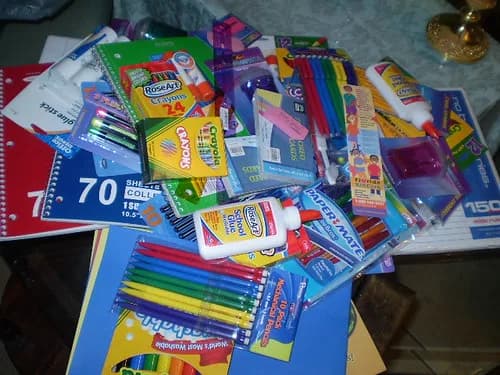
The supplies themselves are the smallest category. These subtotals come from itemised grade-by-grade lists priced at typical Walmart, Target and Dollar Tree levels. They are illustrative and were not re-checked in store for 2026, so check your own school's list and shelf prices:
| Grade | Core supplies (illustrative) |
|---|---|
| Kindergarten | about $12 |
| Elementary (1 to 5) | about $13 |
| Middle school (6 to 8) | about $18, or about $28 with a required scientific calculator |
| High school (9 to 12) | about $21, or about $26 to $29 with a new flash drive |
Across the grades, supplies run about $12 to $29 per child, which leaves most of a $100 budget for a backpack (illustratively $9 to $20) and a lunch bag ($5 to $8). Clothes, shoes and electronics are where the rest of the national average goes.
A one-day shopping plan
Treat it like a recipe:
- The night before, do a home inventory. Gather every reusable supply (scissors, rulers, backpacks, half-full crayon boxes) and cross them off the school list.
- Set a hard cap in cash or as a limit in your banking app; a wallet that runs empty can't overspend.
- Check the store apps for the week's deals and plan your route so you hit the discounts you found first.
- Start with the dollar store for erasers, glue, folders, sharpeners, tissues and hand sanitizer.
- Make the big-box stop next for crayons, markers, pencils, notebooks, the backpack and any clothing basics.
- Tally as you go in your phone's calculator, and when you're near your cap stop adding anything that isn't on the school list.
- Save your receipts, so a backpack zipper that fails in week two can be returned or exchanged.
Watch for "back to school" sales that are not actually deals. A "2 for $7" highlighter bundle sounds urgent, but that is $3.50 each; if the same highlighters sell individually for $1.25, the bundle costs nearly three times as much per item. Both figures are examples; the arithmetic is the point. Check the price per item, not the splashy bundle sign.
Best Times to Shop (Week-by-Week, July Through September)
Timing is half the savings. Here's a simple calendar.
Mid-to-late July
Compare consumable-supply prices now with the prices you see later in the season rather than assuming one shopping window is always cheapest.
First two weeks of August
If your state has a sales-tax holiday, check the official dates and eligible items before planning purchases around it. Where one applies, it comes off clothes, shoes and bigger-ticket items on top of any sale price.
Late August
If you can wait on a backpack or lunchbox, recheck the price after the initial back-to-school rush and compare it with the price you saw earlier.
Labor Day weekend (early September)
If a teacher requires a calculator or other electronics, compare any promotion you find with the regular price and with other retailers before buying.
Mid-to-late September
Fall clothing clearance begins as stores make room for holiday stock. Great for stocking up on the next size up.
Worked example
Take a parent with two kids working to a $550 budget.
They find $45 of usable supplies already at home, so those cost nothing. Then they spend: $18 at Dollar Tree on the rest of the supplies, $190 on shoes and clothes during a state tax-free weekend, and $85 on a graphing calculator in the Labor Day sales. Both backpacks get reused.
Actual spend: $18 + $190 + $85 = $293. That is $257 under the $550 budget, and about $571 below the $863.86 national average.
Illustrative figures throughout; your prices will differ.
Apps That Give You Cashback on BTS Shopping
Cashback apps pay you back a small percentage of what you spend. You're going to buy the stuff anyway, so this is free money for a few extra taps.
- Ibotta — Add offers before you shop, then scan your receipt. Ibotta publishes its own figure for what users earn: $218 a year on average, which is roughly $18 a month. You need a $20 balance before you can withdraw.
- Rakuten — Best for online shopping. Click through Rakuten to a retailer and earn cash back at the rate shown next to that store before you click.
- Fetch — The easiest one. Snap a photo of any receipt and earn points toward gift cards. No pre-selecting offers needed.
A simple way to stack savings
- Buy items on sale during tax-free weekend.
- Activate Ibotta offers on those same items first.
- Scan the receipt into both Ibotta and Fetch.
Keep the expectation modest. Ibotta's own $218-a-year average works out at about $18 a month across a whole year of shopping, so the back-to-school share of that is small. It is worth doing on purchases you were making anyway; it is not worth buying anything extra for. Our guide to the best cashback apps in the USA goes through what each one actually pays.
What to Skip (Where Parents Overspend)
These are the quiet budget-killers. Skipping them is often where the biggest savings hide.
- Character/licensed supplies. A licensed folder is $2.50; a plain one is $0.79.
- Premium backpacks. A $70 brand-name backpack does the same job as a $25 one.
- Daily bought school lunch when packing costs half as much.
- Buying a full new wardrobe. Kids grow; you'll be back in stores by winter. Buy what fits now.
- Trendy gadgets the school didn't actually require.
- Extra "just in case" supplies. Buy the list, not the whole aisle.
A great companion read here is our list of things to stop buying to save money — several of them sneak into back-to-school carts.
When to be careful
Watch out for "buy now, pay later" offers at checkout. Splitting a $200 purchase into four payments feels easier, but missed payments can add fees and stress. If you can't pay for it today, it may be a sign to trim the cart instead.
Free Resources for Low-Income Families
If money is genuinely tight this year, please know there is real, no-shame help available. These programs exist precisely for families like yours.
- Free and reduced-price lunch (NSLP). Apply through your school district. Federal law caps what a school may charge for a reduced-price lunch at 40 cents (42 U.S.C. §1758), and qualifying families pay nothing at all for a free lunch. Against a paid lunch of around $3.50 that is most of the lunch line in your budget.
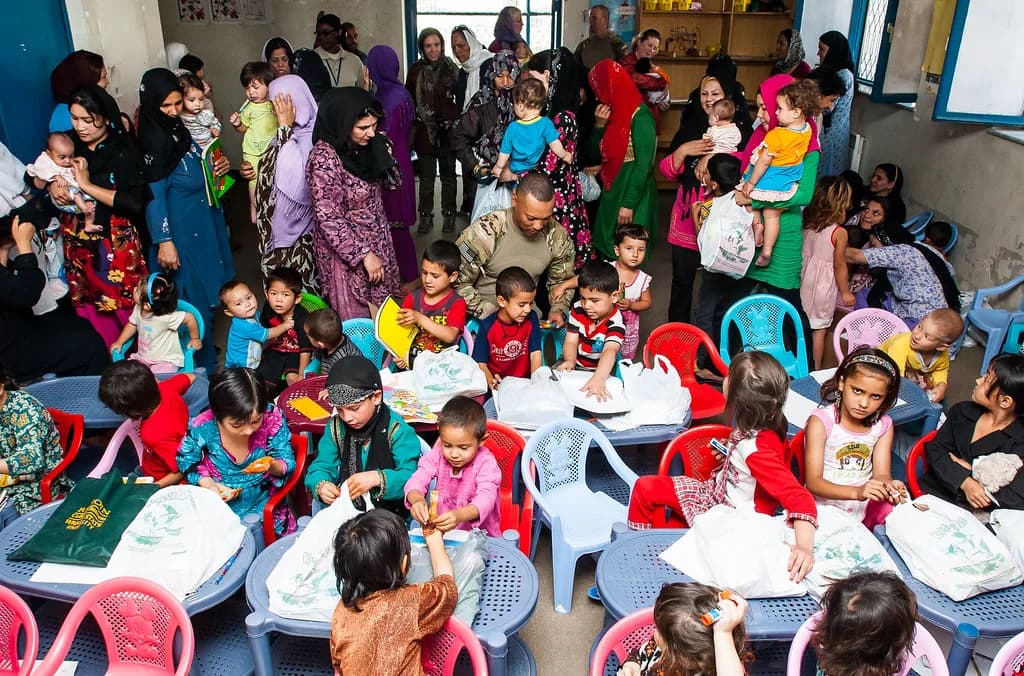
- School supply drives. Organizations like the Salvation Army, United Way, and local churches give away free backpacks filled with supplies in July and August. Ask your school counselor for a list.
- Operation Backpack and similar nonprofits provide free supplies in many cities.
- Tax-free weekend helps every family, but matters most when every dollar counts.
- Local Buy Nothing groups on Facebook — parents give away gently used clothes, shoes, and supplies for free.
- Your school's front office. Many keep a quiet stash of supplies for any student who needs them. Just ask.
Reaching out for these is smart parenting, not failure. Thousands of families use them every single year.
Your Savings Action Plan
Here is the plan with the arithmetic shown, because "save up to $500" is doing a lot of work in most articles on this topic — including, until this revision, in ours.
One-off savings on the shopping itself:
| Step | When | Illustrative saving |
|---|---|---|
| Shop your house before buying anything | This week | $40 |
| Buy consumables at Dollar Tree and clearance | Mid-July | $50 |
| Reuse backpacks and lunchboxes | — | $60 |
| Buy clothes and shoes during a tax-free weekend, if your state has one | August | $50 |
| Use cashback apps on what you buy anyway | Throughout | $25 |
| Buy required electronics in the Labor Day sales | Early September | $30 |
| Skip licensed supplies and the "full wardrobe" | — | $80 |
| One-off total | $335 |
The recurring saving, which is where the rest comes from:
Packing lunches instead of buying them. The saving is the difference between the two, not the price of a bought lunch. Illustratively, with a bought lunch at $3.50 and a packed one at $2.00 (both assumptions; use your district's price and your own ingredient costs), that is $1.50 a day. Across about 18 school days a month it is about $27 a month per child, or about $243 over a nine-month school year ($1.50 × 18 × 9). It arrives a month at a time, not in August.
So the honest headline is: about $335 off the shopping, plus around $27 a month per child if you switch to packed lunches. The full sum: $335 plus the lunch saving passes $500 after about seven months with one child ($335 + 7 × $27 = $524; after six months it is $497, just short) or after about four months with two children ($335 + 4 × $54 = $551; after three it is $497). Lunches alone come to only about $162 over six months for one child. They are not $500 saved on a shopping trip, and any article telling you otherwise is adding two different things together.
Every figure in the table is an illustration built on the assumptions in the sections above, not a measurement. Run them against your own list.
How we evaluated these options
BudgetCalm evaluated publicly available product information, pricing, features, availability, and official documentation. We did not test every product hands-on, and we say so rather than implying otherwise.
What we compared
- National spending figures taken from the NRF/Prosper survey rather than estimated
- Sales tax holiday count checked against the Tax Foundation's 2026 list (20 states, at least ten back-to-school)
- Reduced-price lunch cap taken from federal statute
- One-off savings and recurring savings reported separately, and each total recomputed
- Retail prices treated as illustrative, because they change weekly and vary by store
BudgetCalm did not survey any family or price any basket in a store. The national averages are the NRF's; the savings table is an illustration built from the assumptions stated beside each row. Two corrections were made at this review: the worked example previously totalled $338 by counting $45 of supplies the family already owned as if spent, and the guide previously said 'most states' waive sales tax during a holiday, when the Tax Foundation counts 20 states holding any sales tax holiday in 2026, at least ten of them back-to-school themed. On 2026-09-30 the lunch saving was also corrected: it had treated a packed lunch as free ($60 to $80 a month) instead of taking the difference between a bought and a packed lunch (about $27 a month), and 'about thirteen' back-to-school holiday states was reduced to the ten the Tax Foundation page names.
This comparison was last worked through in September 2026.
Sources
- National Retail Federation — 2026 back-to-school survey with Prosper Insights & Analytics — average spend per family and category breakdown (7,677 consumers, fielded 1–8 July 2026) (checked 30 September 2026)
- Tax Foundation — Sales Tax Holidays by State, 2026 (checked 30 September 2026)
- United States Code — 42 U.S.C. §1758(b)(9)(B)(ii) — National School Lunch Program: the price charged for a reduced price lunch shall not exceed 40 cents (checked 30 September 2026)
- Ibotta — Official site — published average annual earnings per saver and $20 withdrawal minimum (checked 30 September 2026)
Keep exploring
Where to go next if this guide was useful.
About the author
Founder and sole author, BudgetCalm
I started paying real attention to money in 2016 and have run my own budget since 2018. I built BudgetCalm to cover what most finance sites skip — groceries, no-spend months, and making a tight budget actually hold. I've written 70+ guides and built the 6 calculators on this site because I couldn't find free ones that handled real household numbers without a signup wall. I cover budgeting, grocery savings, no-spend challenges and frugal living. I don't cover investing, tax, credit cards, loans, insurance or debt management.